Straightening Brush Vs Flat Iron UK — £8.99 Clearance Guide
Straightening Brush Vs Flat Iron UK: Rechargeable Heated Straightening Brush at £16.99. A clearance guide to fit, use case and value.
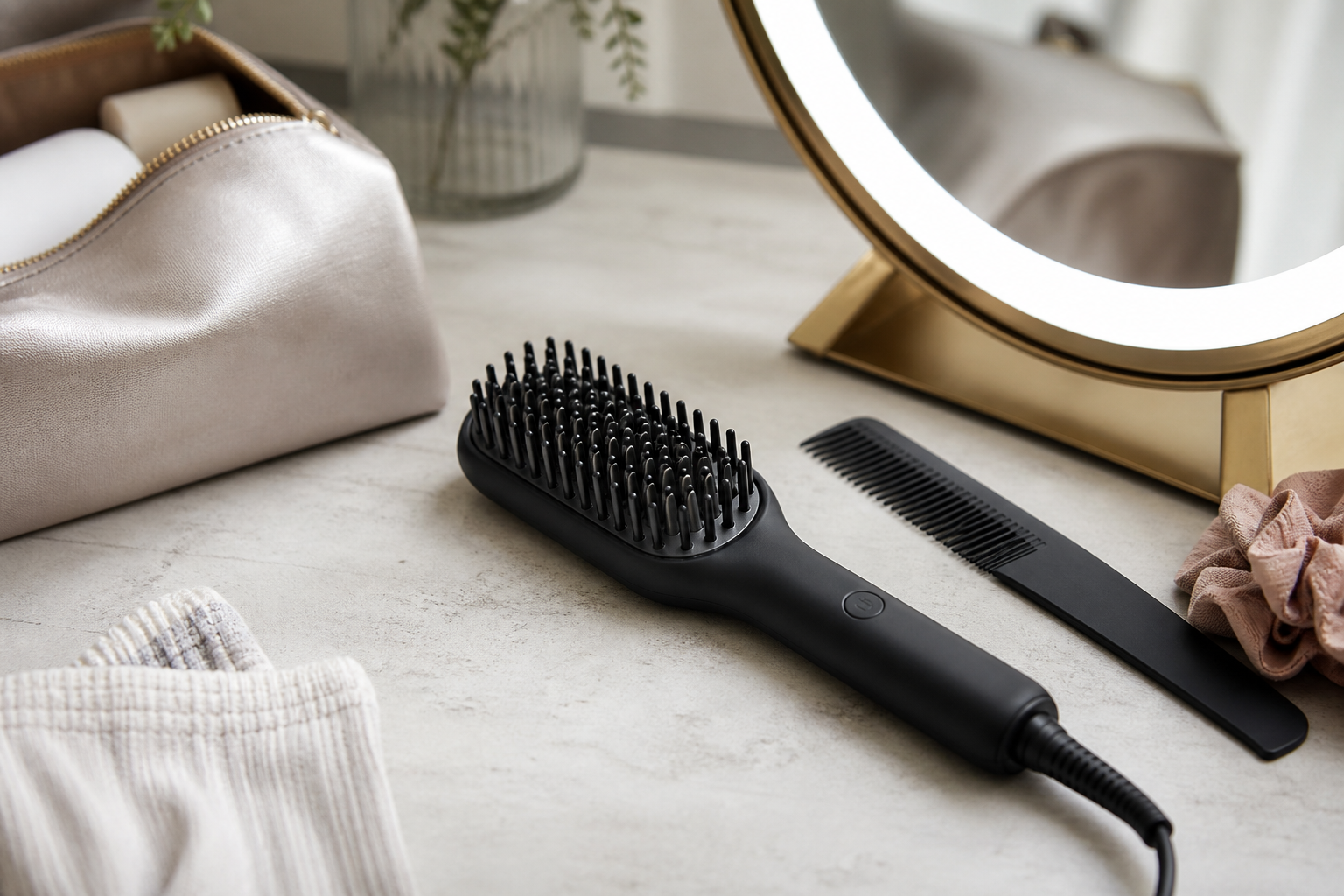
Current clearance price — verified 29 July 2026: £8.99 for the Rechargeable Heated Straightening Brush. This is the live Shopify-synced price for this article’s product. Product availability, variants and delivery terms remain subject to the live product page at checkout.
Best for: portable touch-up shoppers who need an inexpensive rechargeable brush. This guide answers the single search intent “straightening brush vs flat iron” first; it does not claim that one product is right for every shopper.
Straightening brush vs flat iron is a finish-and-workflow choice for people stuck at checkout — not a morality contest and not a category encyclopedia. A flat iron clamps hair between heated plates for sharp sleek. A straightening brush pulls heated bristles through dry hair for softer smooth. Pick by hair type and how “perfectly straight” you need to look, then glance at price and portability. SleekAnywhere’s USB brush (£8.99) sits on the brush side for touch-ups only when the tree says brush.
Evidence boundary (read once): As of 2026-07-24 we have not run a same-strand, instrumented heat-damage lab comparing this brush to a plate iron. We do not publish a fictional “relative damage %.” What follows is mechanism + a checkable decision framework (temperature setting × pass count × hair type) + public price anchors — not a co-strand diary.
Mechanism: multi-pass bristles vs clamp pressure
| Factor | Straightening brush | Flat iron |
|---|---|---|
| Motion | Brush through (often several light passes) | Clamp + glide (fewer, higher-pressure passes) |
| Heat geometry | Distributed along heated bristles / teeth | Concentrated between two plates |
| Finish | Soft, brushed sleek; some natural movement can remain | Sharp, glassy potential when sectioned well |
| Fringe / short hair | Often forgiving if sectioned | Needs care or slim plates (e.g. ghd Mini) |
| Thick / resistant curl | More passes; may stall | Usually stronger for true sleek |
| Learning curve | Familiar brushing | Section discipline |
Relative note: brushes often mean less concentrated clamping heat on light dry passes. That is a geometry difference, not “won’t damage hair.” Heat tools still stress keratin; technique and temperature matter on both sides.
Checkable heat framework (not a damage %)
Use this table to decide how hard you will work the tool — still not a quantified injury score.
| Hair type | Brush starting point (teaching) | Iron starting point (teaching) | Pass budget before you reconsider tool |
|---|---|---|---|
| Fine / soft frizz | Mid setting if available; SleekAnywhere PDP: try 160–180°C | Low–mid plate heat per your iron’s manual | Brush: 1–2 slow passes. If you need 4+, stop and ask whether plates fit better for that piece |
| Medium wavy, soft straight look | 180°C class touch-up | Mid plate heat | Brush first; keep plates as event backup |
| Thick / coarse / tight curl | Brush = surface frizz only; do not chase glass | Plate iron (or pro blow-dry) for true sleek | If brush needs endless passes at 200°C, the tree already said iron |
| Short / fringe-led | Section lanes; mid heat; see short-hair guide | Slim plates for crease | Brush for soft fringe; Mini plates for fold |
SleekAnywhere heat settings (PDP 2026-07-24): 160°C / 180°C / 200°C. Heat-up seconds not measured / not listed. Competitor plate temps belong to those brands’ manuals — we do not invent Unplugged surface °C here.
Guidance above is editorial teaching + merchant-listed °C, not a SleekAnywhere heat-damage assay.
Hair-type decision tree (closes buy / don’t-buy)
- Fine hair, everyday frizz → Brush frequently enough. Matching CTA: brush lane.
- Wavy medium, soft straight look → Brush first; keep a cheap iron as backup if needed.
- Thick, coarse, or tightly curly — need glass sleek → Flat iron (or pro blow-dry). Brush for maintenance only. Do not buy a budget USB brush expecting Unplugged-level clamp.
- Short / fringe-led soft tidy → Brush or mini straightener logic; cut maps on straightening brush for short hair.
- Need knife-sharp crease → Slim plates (ghd Mini £159–£169, checked 2026-07-24), not more brush passes.
- Travel / commute touch-ups on dry mid lengths → USB brush lane: portable hair straightener, travel hair straightener.
Who should not buy the brush (before any product CTA)
- Decision tree output = must have plate crease / full-head coarse sleek
- You refuse to section and want one magic tool for every finish
- You want a hot-air blowdry brush (wrong family — start at heated brush)
Price layer + portability layer
| Layer | Brush example | Flat iron example |
|---|---|---|
| Prestige cordless | Revamp/TYMO straightening brushes ~£81–£90 (checked 2026-07-24) | GHD Unplugged ~£299 / Dyson Corrale ~£399 |
| Sharp mini plates | — | ghd Mini £159–£169 |
| Budget / clearance | SleekAnywhere USB £8.99 | Sub-£20 plug-in irons (different job: mains full-head) |
Portability favours charged brushes and cordless plates; plug-in irons win at the dressing table. Category hub: hair straightener brush. Confused by “hot brush” air tools? heated brush.
Can a brush replace an iron?
| Outcome | When |
|---|---|
| Soft daily hair — often yes | Fine/medium, fringe and flyaways, commute tidy |
| Glass-straight thick hair — rarely | Coarse / tight curl / event poster-straight |
| Own both | Brush for Tue/Thu touch-ups; iron for nights out |
| USB brush + existing iron | Common when plates already live at home and you need bag portability — where £8.99 clearance shines |
2 for £16.99 only if both tools you need are brushes. It is not a substitute for buying plates when the tree said plates.
Snippet-ready one-liner
A straightening brush softens and smooths with a brushing motion; a flat iron clamps hair between plates for sharper sleek — choose by finish and hair density, not by which tool sounds gentler in an advert. We have not published a co-strand damage percentage for either.
Volume vs sleek
Brushes can leave a little natural movement because hair is not pressed flat between plates. Irons can remove that movement when you want a poster-straight line. Event makeup and high humidity may push you toward plates; low-drama weekdays may prefer a brush.
Clearance CTA (matching branch only)
Unique hook: comparison steps pointed to a USB brush for portable smoothing — and you are not in the “must have plates” box. £8.99. Prestige plates stay correct when plates are the honest answer.
USB facts: USB hair straightener. Cheap mains SERP: cheap hair straightener. Cordless mid: cordless hair straightener brush.
Shop (brush match only): SleekAnywhere.
FAQ
Which is better for thick hair?
Flat irons usually for true sleek. Brushes help with surface frizz only.
Which is better for fine hair?
Often a brush at moderate heat with a low pass budget.
Which causes less damage?
Geometry differs (clamp vs bristle pass-through). We have no co-strand quantified damage %. Heat is still heat on both sides — control temperature and passes using the framework above.
Did you test the same strand with brush and iron?
No (status as of 2026-07-24). Do not treat this page as a lab report.
Which is faster?
Depends on length and skill. Short hair + brush can be quick; long thick hair + iron with good sections can be efficient.
Should beginners start with a brush?
Many find brushing intuitive. If you need sharp styles, learn iron sectioning early.
Where do I buy the brush option on this site?
Product page via the portable or category hubs — only after the tree said brush.